
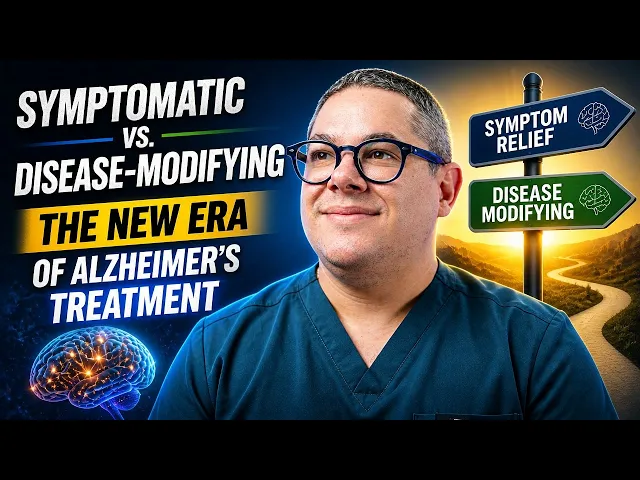
Navigating an Alzheimer’s Diagnosis: Your 2026 Clinical Roadmap
In 2026, an Alzheimer’s diagnosis is no longer a static prognosis—it is a call for targeted clinical action. By moving beyond symptomatic pills and utilizing amyloid-clearing infusions (like Lecanemab) and APOE ε4 genetic screening, we can now physically alter the disease's trajectory. The goal of modern neurology is early intervention to protect your "Time in Range" for cognitive function and preserve your quality of life.
Dr. Wilmer Valentin
Jun 9, 2026
Phase 1: Understanding the "Biological Roadblocks"
To understand the treatment, we must understand the pathology. Alzheimer’s is driven by two primary protein failures in the brain:
Amyloid Plaques: Think of these as roadblocks. These sticky clumps build up outside the brain cells, interrupting the signals your neurons are trying to send.
Tau Tangles: These happen inside the neurons. Normally, tau acts like straight railway tracks to transport nutrients. In Alzheimer’s, these tracks collapse into a tangled mess, causing the cell to malfunction.
Alzheimer’s is a complex network failure involving genetics, cellular imbalances, and inflammation. This is why a "one-size-fits-all" pill is rarely the answer.
Phase 2: Confirming the Stage
A diagnosis isn't just about a name; it's about the stage. In clinical practice, we use a three-pronged approach to confirm the diagnosis:
Clinical Assessment: Tracking gradual memory changes over at least six months.
Cognitive Testing: Tools like the MMSE (Mini-Mental State Examination) provide an objective score. A score of 24+ is normal, while 19–23 indicates mild dementia.
Biomarker Evidence: To access the latest 2026 treatments, we must find physical evidence of amyloid via a PET scan or a spinal fluid sample.
Phase 3: Managing Daily Symptoms vs. Slowing the Disease
It is crucial to distinguish between medications that help you feel better and those that change the disease.
Symptomatic Management: Drugs like Donepezil (boosting acetylcholine) and Memantine (regulating glutamate) are excellent for improving day-to-day memory and delaying functional decline. However, they do not remove the underlying plaques.
Disease Modification: Revolutionary monoclonal antibodies (such as Lecanemab and Donanemab) act as a "targeted cleanup crew." Administered via IV infusion, they physically clear amyloid roadblocks. Clinical data shows these can slow clinical decline by as much as 27%.
Phase 4: The Safety Protocol (Genetic Testing)
If you are a candidate for infusion therapies, a DNA test is a mandatory safety step. We test for the APOE ε4 gene.
Why? Patients with two copies of this gene are at a higher risk for ARIA (Amyloid-Related Imaging Abnormalities)—temporary brain swelling or micro-bleeds caused when amyloid is cleared from blood vessels. To keep you safe, your medical team will implement a rigorous MRI schedule (baseline, and before the 2nd, 3rd, 4th, and 7th infusions).
The Future: A "Heart Disease" Approach to the Brain
The next wave of research is targeting the "inside" of the cell using RNA interference to silence the genes that create toxic tau tangles. The future of Alzheimer’s care looks much like heart disease management: a combination of therapies hitting the disease from multiple angles simultaneously.
The Bottom Line: Early Intervention is Everything
As the research consistently shows, the earlier we intervene, the more brain tissue we can protect. Knowledge is your greatest tool, and you are the driver of this journey.
Health Action Step: Your first question for your doctor tomorrow should be: "Based on my biomarker tests and cognitive score, exactly what stage am I in, and am I a candidate for disease-modifying infusions?"
Note: This content is for educational purposes and does not replace a 1-on-1 consultation with your physician. If you are in the Houston area and need a comprehensive neurological evaluation, contact us at Houston Metropolitan Medical
Hi there! We are
Houston Metropolitan Medical
Book an appointment online, or send us a text about scheduling, billing, and more. Not a live chat; response times vary. For emergencies, call 911.