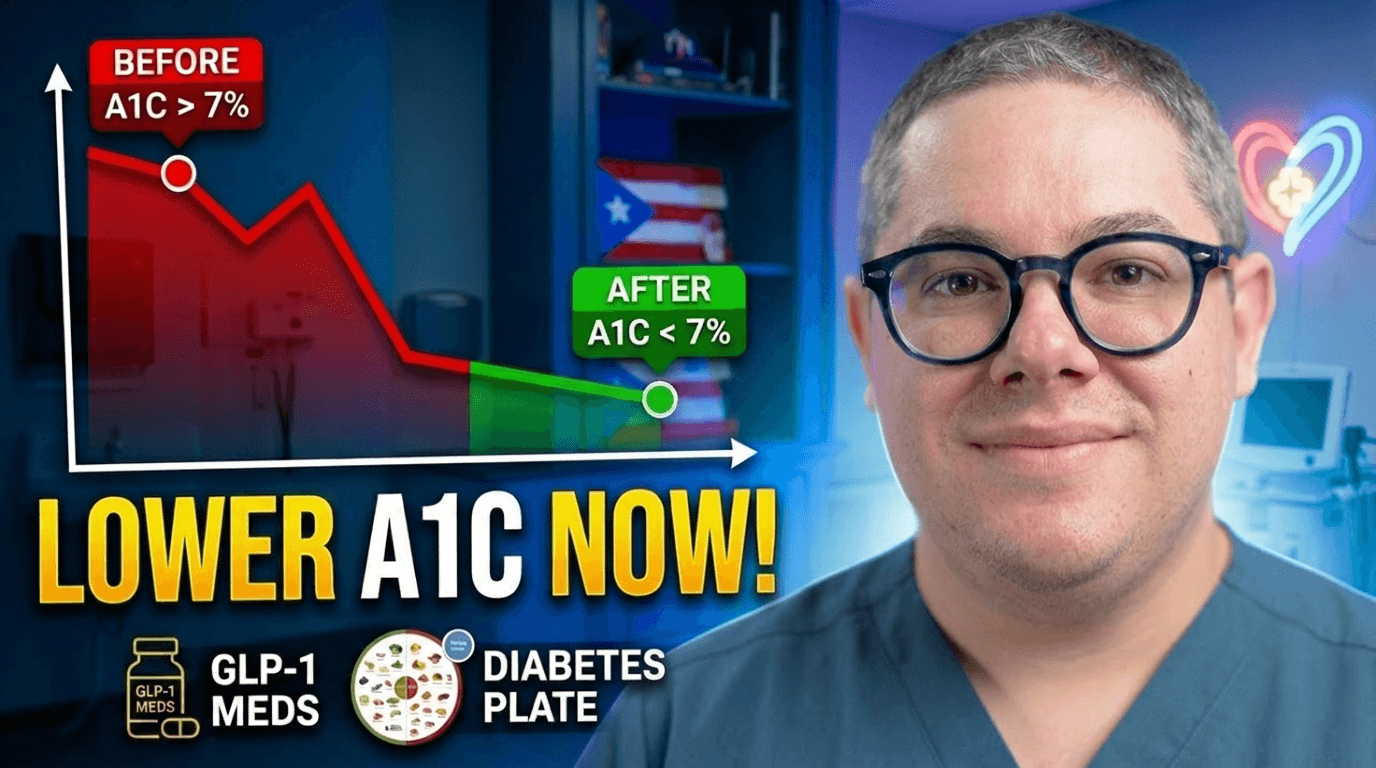

How to Lower Your A1C in 2026: The Clinical Blueprint for Metabolic Health
If you’ve just received an A1C result over 7%—or even higher—it’s easy to feel overwhelmed. But here is the reality in 2026: we have better tools and clearer data than ever before to bring that number down. In my practice at Houston Metropolitan Medical, we are moving beyond the outdated advice of "just eat less sugar." We are looking at what the latest 2026 ADA Standards of Care actually say about your metabolic health to help you lower your numbers safely and effectively.
Dr. Wilmer Valentin
4 may 2026
What is A1C? (The "Metabolic Diary")
Your A1C isn't just a snapshot of a single moment; it’s a 3-month average of your blood sugar. Think of it as your metabolic diary.
According to the latest 2026 guidelines:
The Standard Goal: For most non-pregnant adults, the primary goal is an A1C under 7%.
The Optimization Goal: For those with excellent health and a low risk of hypoglycemia (dangerously low blood sugar), we are now aiming for 6.5% to provide even better protection for your heart and kidneys.
Embrace Continuous Glucose Monitoring (CGM)
Something has changed significantly this year: we no longer wait until diabetes is "out of control" to use Continuous Glucose Monitors (CGMs).
Why it works: A CGM shows you in real-time which foods—even supposedly "healthy" ones—are spiking your glucose.The 2026 Clinical Insight: We now prioritize "Time in Range." Your goal is to stay between 70 and 180 mg/dL at least 70% of the day. If you master your Time in Range, your A1C will naturally follow.
The "Plate Method" 2026 Update
Diet isn't about deprivation; it’s about composition. To keep your glucose stable, use your plate as a guide:
50% Non-starchy Vegetables: Spinach, broccoli, and peppers should take up half your plate.
25% Lean Protein: Fish, chicken, or tofu. Protein acts as your "glucose anchor," slowing down the absorption of sugar into your bloodstream.
25% Fiber-Rich Carbs: Switch white rice for quinoa or farro.
The Fiber Goal: Aim for 25 to 30 grams of fiber daily. Fiber acts like a metabolic filter, preventing sharp A1C-raising spikes.
Use Your Muscles as "Glucose Sinks"
Your muscles are the largest consumers of glucose in your body. When you move, you're essentially "opening the drain" for blood sugar.
The 150-Minute Rule: Aim for 150 minutes of moderate activity per week.
The Post-Meal Secret: A simple 10 to 15-minute walk after your largest meal can significantly lower your post-prandial (after-meal) spike.
Strength Training: Adding muscle mass increases your baseline insulin sensitivity, making it easier for your body to manage sugar even while you're resting.
The Role of Modern Medication
In 2026, we have powerful tools like GLP-1 and GIP receptor agonists. These medications are no longer viewed solely through the lens of weight loss; they are foundational for A1C control and protecting your heart and kidneys.
If lifestyle changes aren't hitting the mark, don't view medication as a failure. View it as a biological assist to get your body’s chemistry back into balance.